Blog
Case studies and methods
Each post takes one question people bring to this site and works it through against the evidence — archives, published genetics, and the medieval Jewish genomes from Tàrrega.
What the Jews of Tàrrega actually were — and why their closest match was in Germany
Catalan Jews killed in 1348 matched no modern Jewish group. The only single population that fit was another medieval Jewish community 1,200 km away.
The surname is not the evidence
There is no official list of Sephardic surnames. The same name can sit on both sides of the same story — and sometimes isn't even inherited from the father.
Founder variants: what carrier status can and can't tell you
Carrying a 'Jewish genetic disease' variant isn't an ancestry test, and not carrying one tells you almost nothing. Here is what the variants can actually say.
Reading ancient DNA results without fooling yourself
A tidy dot on a chart can be a sample that failed quality control. Five checks to run before believing any ancient 'match'.
Three countries, three kinds of evidence
Colombia has the genetics, Mexico has the documents, Costa Rica has the family trees. The evidence is not the same in each, and the next step differs.
Costa Rica's two Sephardic arrivals, four centuries apart
Colonial New Christians around Cartago, Caribbean Sephardim from Curaçao in the 1800s, and a Polish wave in the 1930s — three layers readers constantly confuse.
The Bishop of the Jews: Elias l'Eveske and the Family That Disappeared
England's chief rabbi begged to take his people out of the country in 1253. In 1259 he was reported baptised with two sons. Then the record goes quiet.
One ancestor, eight thousand years, eight places: why a deep Y-DNA match means nothing
A man who lived around 6200 BCE has male-line descendants in China, Saudi Arabia, Sardinia, Dagestan, Morocco and a French-Canadian founding family. Sharing him makes you none of those things.
Nine Quebec founders, nine Y-chromosomes, nine answers of "undetermined"
We checked the Y-DNA of nine New France founding lines against the nearest Jewish branches. Every one came back undetermined — for four different reasons.
"My haplogroup has no Jewish matches, so I'm not Jewish" — why that's wrong
Two men murdered in the 1348 massacre of Tàrrega's Jews carry Y-lines with no modern Jewish matches. An empty match list is not a negative result.
There is no Jewish haplogroup — but there are Jewish branches
'Is J a Jewish haplogroup?' is the wrong question. The right one is which SNP — and how recently your branch meets a Jewish one.
Why your "Sephardic %" is probably wrong
Consumer tests detect Ashkenazi ancestry very well and Sephardic ancestry badly. Below about 2%, the number is noise.
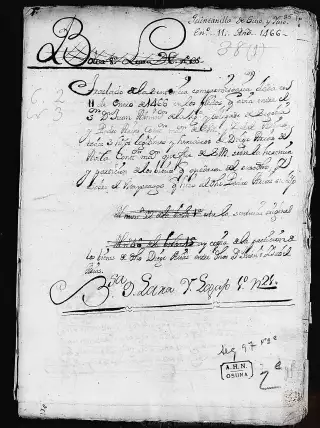
Pedrarias Dávila, or: why the documented conversos are the ones who failed
The founder of Panama City was the grandson of a Jewish boy named Isaque. We know only because the Inquisition put his dead grandparents on trial.
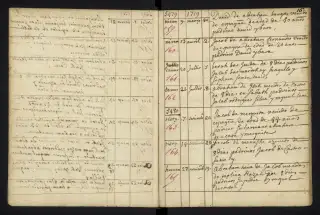
Two men who came back: Bordeaux, 1719
In 1719 a fifty-year-old and a forty-four-year-old arrived in Bordeaux from Spain and were circumcised — four years before French law allowed them to be Jews.
Columbus: the claim everyone repeats, and the document nobody mentions
The 2024 Columbus DNA claim is unpublished. The converso money behind the first voyage is in a printed letter of 1493.
Why the endogamous families show it and everyone else doesn't
Old 'Spanish' families of Antioquia, Nuevo León and Costa Rica aren't more Jewish than their neighbours. Their family structure kept a 500-year-old signal readable.
The Avar, the Priest, and the Levite: Why Your Y-DNA and Your Ancestry Can Tell Different Stories
An eighth-century man buried near Vienna was entirely European by ancestry and carried a Y-line from a clade that is today overwhelmingly Jewish.